
Meniscus Tear Rehabilitation in Houston, TX
A meniscus tear is one of the most common knee injuries, and it can hit your day-to-day life fast. One wrong twist on the soccer field, a pivot in the gym, or a gradual wear-and-tear change over time can leave you with pain, stiffness, and a knee that does not feel trustworthy.
At Jennifer Klein Physical Therapy & AATB Pilates, we treat meniscus injuries with a clear priority: restore how your knee moves and loads, not just reduce symptoms. That means orthopedic-level evaluation, targeted strengthening, and stability work that improves biomechanics across your whole lower body, so your knee can handle real life again with confidence.
Understanding Your Meniscus Tear
Your meniscus is made up of two crescent-shaped pieces of fibrocartilage:
- Medial meniscus: inside of the knee
- Lateral meniscus: outside of the knee
These structures sit between your thigh bone (femur) and shin bone (tibia). Their main jobs are shock absorption, load distribution, and helping stabilize the joint. When the meniscus is irritated or torn, the knee can struggle to tolerate everyday forces, which is why pain, swelling, and stiffness are so common, sometimes along with catching/locking or a feeling the knee may “give way.”
Why Tear Type Matters
- Degenerative tears: Common in older individuals and driven by long-term wear and tear changes. These often do very well with structured physical therapy as a first step, depending on symptoms and goals.
- Radial tears: Tears that run from the inner edge outward, cutting across the meniscus’ fibers and potentially reducing how well it handles load.
- Bucket-handle tears: Larger tears where a portion of the meniscus can displace into the joint space. These can cause true mechanical locking and may require surgical evaluation, especially if the knee is physically blocked.
Understanding your tear type, plus your movement limits and symptom triggers, is the first step in building a plan that actually fits your knee.
Phases of Meniscus Tear Rehabilitation

Phase 1: Pain Management and Swelling Reduction (Weeks 1–2)
Goal: Calm the joint while keeping the knee safely moving.
- Reduce pain and swelling without provoking the tear
- Gentle manual therapy to support circulation and comfort
- Pain-free active range of motion (AROM) to limit stiffness
- Protection strategies: bracing and activity modification
Expected Outcome: The knee feels safer and less fragile, setting up faster progress later.
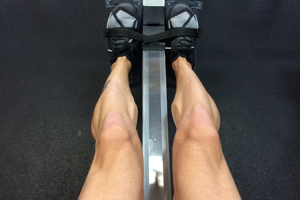
Phase 2: Restore Range of Motion & Basic Strength (Weeks 3–6)
Goal: Restore mechanics and reintroduce load.
- Regain full knee extension to normalize gait
- Gradual, controlled weight-bearing progressions
- Light resistance for quads, hamstrings, and calves
- Mobility work for comfortable flexion and extension
- Early balance drills to retrain neuromuscular control
Expected Outcome: The knee starts to feel “normal,” not just manageable.

Phase 3: Dynamic Strengthening and Stability Integration (Weeks 6–12)
Goal: Bridge strength to real-world movement.
- Functional single-leg strength (step-ups, lunges, single-leg deadlifts)
- Advanced balance and proprioception challenges
- AATB Pilates integration to improve core and hip stabilization
- Controlled multi-directional and agility foundations
Expected Outcome: Repeatable movement quality, even when tired or moving quickly.
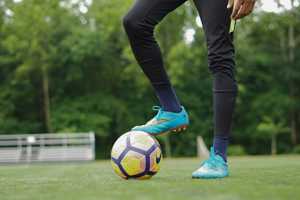
Phase 4: Return to Sport, Activity, and Prevention (12+ Weeks)
Goal: Build capacity for higher speeds and higher forces.
- Sport- and activity-specific drills
- Progressive plyometrics for fast force absorption and production
- Endurance work to improve resilience
- Customized long-term prevention program focused on hip and core stability
Expected Outcome: Not just “I can do it once,” but “I can do it consistently.”
Our In-Network Physical Therapy Provider Status

In-Network Coverage
Plans Include: Blue Choice PPO and Blue Advantage HMO.
When Is Surgery Necessary?
We prioritize conservative care, but we also recognize when surgery becomes the appropriate next step. We maintain close professional relationships with top orthopedic surgeons in Houston, so care transitions are coordinated when needed.
Surgery may be indicated when you have:
Mechanical Locking
If a large flap of tissue, such as a bucket-handle tear, repeatedly folds into the joint space and locks the knee, PT alone may not resolve it.
Persistent Instability After High-Quality Rehab
If your knee repeatedly gives way or buckles despite 10–12 weeks of dedicated, high-quality physical therapy, the plan needs to be re-evaluated.
Specific Unstable Tears in Poor Blood Supply Zones
Certain complex tear patterns in the avascular (low blood supply) area may need repair to reduce longer-term joint issues.
PT Still Matters After Surgery
If you do require surgery, physical therapy remains the most important step afterward. Post-operative rehab typically focuses on scar tissue management, restoring full range of motion, and rebuilding strength and stability in a progressive way.

Meet Jennifer Klein
Jennifer Klein, PT
Physical Therapist, Certified Pilates Instructor
Jennifer Klein, Physical Therapist, is a native Houstonian, having resided here since 1978 and practiced her professional here since 1987, She Obtained her Physical education at University of Texas Medical Branch in Galveston, Texas, and her MBA from Our Lady of the Lake University in San Antonio, Texas, Her Pilates certification was obtained through Balanced Body University.
Jennifer enjoys being a licensed PT – she is passionate about her work and hight motivated to assist her patients with achieving their goals. Additionally, she enjoys helping other people learn the art of movement through her Pilates instruction. Outside of the clinic she enjoys traveling, reading, exercising, and animal rescue.
Get in Touch for Meniscus Tear Rehab in Houston, TX
If a meniscus tear is keeping you from living the active life you want in Houston, start with a comprehensive evaluation. Contact Jennifer Klein Physical Therapy to schedule your assessment and begin a structured rehabilitation plan aimed at lasting stability and pain relief.
Questions? Get In Touch Now!
Contact us using the form below or call us at 713-203-0787 with any questions you may have.