Recovering from rotator cuff surgery raises many questions. How long will therapy last? What will each phase involve? At Jennifer Klein Physical Therapy, we’re here to lay out a clear roadmap. Drawing on evidence-based protocols and years of clinical experience, we guide your rehabilitation. We cover everything from passive motion to advanced strengthening, giving you the tools to reclaim your life.
No two recoveries are the same, but formal physical therapy commonly lasts several months, with timing varying by tear size, repair type, surgeon protocol, and individual healing. In this article, we’ll break down each phase, so you know exactly what to expect and feel confident as you hit the ground running.
Quick Answer: What Is the Typical Length of Physical Therapy After Rotator Cuff Surgery?
Physical therapy after rotator cuff surgery usually lasts around three months. Many patients move through protected motion, active movement, and strengthening over time, with full recovery often taking around six months or longer, depending on the repair and healing process.
Understanding Your Surgery and Why Physical Therapy Matters
Repairs vary, arthroscopic (small incisions), mini-open, or open, based on tear size and surgeon preference. Each impacts your healing timeline.
PT isn’t just a box to check, it powers your recovery by:
- Preventing stiffness and scar tissue buildup
- Restoring safe shoulder range of motion
- Rebuilding rotator cuff and scapular muscle strength
- Reducing pain and swelling with hands-on techniques and targeted exercises
Knowing how PT drives each phase keeps you motivated and on track.
Typical Physical Therapy Timeline: Phases & Durations
We break your rehab into four key phases. Each builds on the last to guide you safely from immobility back to full function.
Passive Range of Motion (Weeks 0–6)
-
- Goals: Protect the repair, prevent stiffness
- Activities:
-
- Sling use as directed, removing only for approved exercises, hygiene, or therapy
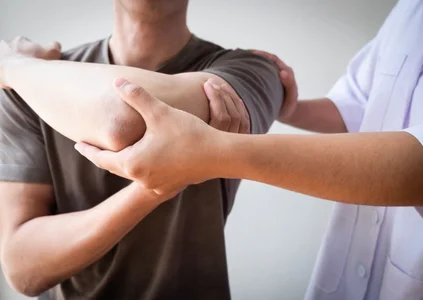
- Therapist-guided gentle stretches and pendulum swings
- Ice and soft-tissue massage to control swelling
- Expected duration: 2–8 weeks, depending on tear size and surgeon protocol
Active-assisted & Active Motion (Timing Varies by Tear Size and Surgeon Protocol)
-
- Goals: Regain active movement, wean off sling
- Activities:
-
- Assisted shoulder stretches using your other arm, a cane, or pulleys
- Gradual progression to active shoulder elevation and rotation within pain limits
- Continued icing and hands-on joint mobilizations
- Expected duration: Varies by tear size, healing, and surgeon protocol
Initial Strengthening (Timing Varies by Tear Size, Healing, and Surgeon Protocol)
-
- Goals: Rebuild rotator cuff and scapular muscle strength
- Activities:
-
- Isometric holds (0°–30° elevation) progressing to light resistance band exercises
- Scapular stabilization drills (e.g., serratus punches, rows)
- Low-load closed-kinetic-chain work (wall push-ups)
- Expected duration: 8–12 weeks
Advanced/Return-to-Activity (Months 4–6+)
-
- Goals: Restore power, endurance, sport or work–specific skills
- Activities:
-
- Progressive loading with free weights or machines
- Plyometric drills for athletes (medicine-ball throws, plyo push-ups)
- Functional simulations (lifting, reaching, throwing)
- Formal PT may conclude by month 3, but full discharge and return to high-level activities may occur around 6 months or later.
What Influences Your PT Duration?
Several factors can speed up or slow down your timeline:
- Tear size & surgery type: Open repairs generally require longer protection than arthroscopic.
- Age & general health: Younger, well-conditioned patients often progress faster.
- Adherence: Consistent attendance and diligent home-exercise performance accelerate gains.
- Comorbidities & lifestyle: Smoking, diabetes, and poor nutrition can delay tissue healing.
- Scar tissue formation: Excessive fibrosis may require extra manual therapy sessions.
Anatomy of a PT Session: What to Expect
At each visit, we’ll guide you through a structured routine:
Warm-Up & Assessment
- Gentle arm pendulums, bike or treadmill to increase circulation
- Quick check of pain, swelling, and range of motion
Manual Therapy
- Joint mobilizations, soft-tissue massage to break up scar tissue
- Hands-on stretching to improve mobility
Guided Exercises
- Guided ROM drills, isometrics, resistance-band work
- Scapular stabilization and posture training
Education & Home Plan
- Instruction on proper movement patterns
- Daily exercise prescription and progress tracking
Maximizing Your Recovery at Home
Your success hinges on more than clinic visits. Use these strategies daily:
Home-Exercise Checklist
- Phase-appropriate moves (e.g., pendulums in Phase 1; band rows in Phase 3)
- 10–15 minutes, 2–3 times per day
Pain & Swelling Control
- Ice for 15–20 minutes after exercises
- Elevate the arm on pillows when resting
Lifestyle Support
- Aim for 7–9 hours of sleep to aid tissue repair
- Eat protein-rich foods and stay hydrated
Safe Progression
- “Good” soreness is mild and resolves within 24 hours
- Sharp pain or increasing swelling means back off and call us
Emerging Technologies & Telehealth in Rotator Cuff Rehabilitation
We’re seeing exciting tools that bring your rehab home:
- Virtual PT visits: Real-time video guidance and instant feedback
- Wearable sensors: Track your shoulder’s motion and send data to us
- Rehab apps: Exercise libraries, reminders, and progress dashboards
- Online education: Video tutorials and tele-check-ins to keep you on track
Final Thoughts on How Much Time Will You Spend in Physical Therapy After Rotator Cuff Surgery?
Many patients make substantial progress within several months, but formal PT duration and full functional recovery vary by tear size, repair type, and individual healing. Your consistency, honest feedback, and adherence to both clinic and home programs make all the difference. If you are ready for personalized care in a comfortable, one-on-one setting, contact Jennifer Klein Physical Therapy in Houston to schedule your evaluation and get started today.
Recent Comments